
Prof. Dr. Bankole A. Johnson

Professor Bankole A. Johnson
The Enterprises
Where the Science Lives Today
Four ventures, one throughline: turning forty-five years of neuroscience and molecular genetics into care people can actually receive.
The Enterprises
Where the Science Lives Today
Four ventures, one throughline: turning forty-five years of neuroscience and molecular genetics into care people can actually receive.
the LIFE
A Career Built on Two Continents
From Nigeria to Glasgow, Oxford to Texas, Virginia and Maryland — and now Miami. Five decades of neuroscience distilled into one practice.
the LIFE
A Career Built on Two Continents
From Nigeria to Glasgow, Oxford to Texas, Virginia and Maryland — and now Miami. Five decades of neuroscience distilled into one practice.
At a Glance
Born
November 5, 1959, Nigeria
Medical Degree
University of Glasgow, 1982
MPhil
University of London, 1991
Doctor of Science
University of Glasgow, 2004
Board Certification
ABPN Psychiatry
Fellowship
Royal College of Psychiatrists
Honor
Queen Elizabeth II Medical Service Award
Base
Brickell Ave, Miami, FL
Professor Bankole Akindeinde Johnson's story begins in Nigeria and moves through the lecture halls of King's College, Lagos, and the Institut Catholique de Paris, before arriving in 1977 at the University of Glasgow — where he earned his medical degree and, decades later, the university's highest doctoral honor, the Doctor of Science, for a lifetime of contribution to medicine.
His formative scientific years were shaped at Oxford University as a Wellcome Research Fellow, and at the Maudsley and Institute of Psychiatry in London, where he trained in general and forensic psychiatry. It was there that the question defining his career took hold: why do some people become dependent on alcohol and drugs, and others do not — and could the answer lie not in willpower, but in chemistry?
"My understanding of how much of a brain disease the use of alcohol and drugs is — and my rejection that this was a disease of bad luck and personality — despite its great unpopularity, even amongst some today."
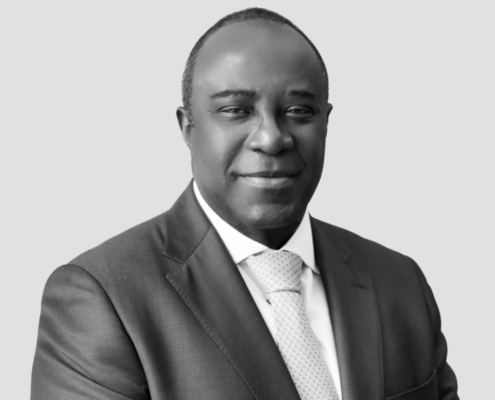
That conviction carried him across the Atlantic in 1993, into a twenty-year ascent through American academic medicine — from Assistant Professor at the University of Texas–Houston, to Wurzbach Distinguished Professor and Chief of the Division of Alcohol and Drug Addiction at UT Health San Antonio, to Alumni Professor and Chairman of Psychiatry and Neurobehavioral Sciences at the University of Virginia, and finally to the Dr. Irving J. Taylor Professorship and Chairmanship of Psychiatry at the University of Maryland School of Medicine, where he also directed the Brain Science Research Consortium and oversaw the care of more than 3,000 addiction patients a year.
His laboratory findings moved directly into the clinic. Research on ondansetron and topiramate for alcohol dependence — published in JAMA and The Lancet — reshaped pharmacological addiction treatment, and his later pharmacogenetic work at the serotonin transporter gene helped open the era of personalized addiction medicine. That body of work is now protected by more than 100 international patents and has been cited over 15,000 times.
Adial Pharmaceuticals traces back to research Dr. Johnson began in the 1990s into the genetics of addiction, and was formally founded in 2010 on the promise of a serotonin-3 blocker for people with specific genetic markers. He later returned as the company's Chief Medical Officer, and remains the sole inventor of record on every patent covering its lead compound, AD04 — a portfolio expected to carry market exclusivity into the 2030s. Ringing the NASDAQ bell for the company was, in his own words, one of the pivotal moments of his career. Through the pandemic years he became a recurring national voice on what he has called the "Second Pandemic of Addiction" — the surge in alcohol and substance use that followed COVID-19 — appearing on outlets from NewsNation to the Black News Channel.
In 2020, he brought that same translational instinct south to Miami, founding Casa Privée and later Miami Stem Cell Clinic, while continuing as Chief Medical Officer of Adial. Today, through the IRMN Foundation, he trains the next generation of physicians in regenerative medicine — teaching a flagship seven-hour CME intensive live from his own clinic — and continues to write, at the same desk where the scientist and the novelist have always shared space. As he puts it: it has really been Time Travel in Medicine.
Building the Institution
Project Cathedral & Larkin University
IRMN is explicitly framed, in Dr. Johnson's own words, as "building the institution before the enterprise" — a nonprofit knowledge and physician-education body meant to outlast any one founder, dedicated to trusted clinical intelligence, evidence appraisal and responsible AI. Since 2026 he has also returned to an academic home as Professor at Larkin University, placing his cross-disciplinary method within an explicitly biomedical-sciences setting.
The Wider Laboratory
Beyond Medicine Concepts & Ventures
Materia non medica: ideas that share the same integrative habit as the clinical work, tested under different standards of judgment. None of the following is offered as clinical evidence.

The Enterprises
Where the Science Lives Today
Four ventures, one throughline: turning forty-five years of neuroscience and molecular genetics into care people can actually receive.
The Restoration Framework
Five Aims. Four Evidence Tiers.
Restoration is a claim about function, evidence, manufacturing and time — not a synonym for novelty. Public materials for Casa Privée, Miami Stem Cell Clinic and IRMN document an institutional direction; they do not by themselves establish efficacy or regulatory approval for every listed intervention..
Replacement
Can a missing or failed cell or tissue component be replaced with viable, functional material?
Repair
Can the tissue microenvironment be redirected toward organized healing rather than fibrosis or degeneration?
Modulation
Can endogenous repair pathways be amplified, or maladaptive signaling suppressed?
Rehabilitation
Can biological change become restored performance through training and adaptation?
Prevention
Can intrinsic capacity and whole-person function be preserved before irreversible loss?
Established
Accepted indication, regulated product, professional standards and reproducible evidence.
Promising
Coherent mechanism and meaningful evidence, but incomplete confirmation or implementation.
Experimental
Studied under appropriate oversight with prespecified outcomes and explicit uncertainty.
Speculative: a hypothesis or commercial claim that exceeds available identity, safety or efficacy evidence — the category the source record is most explicit about rejecting, alongside reflexive dismissal of everything new.
Recognition, On Paper
Certificates & Citations
A selection of the formal honors documenting the record — from the University of Glasgow's Doctor of Science to a Governor's citation for service on Maryland's Heroin and Opioid Emergency Task Force.
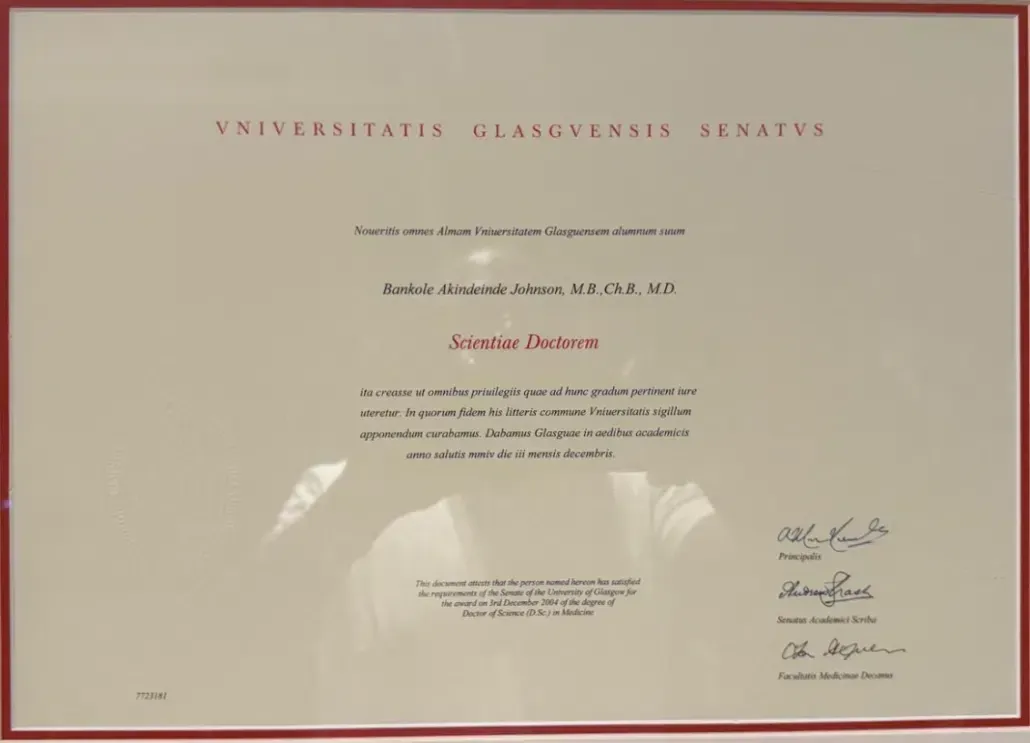
Doctor of Science — University of Glasgow, 2004
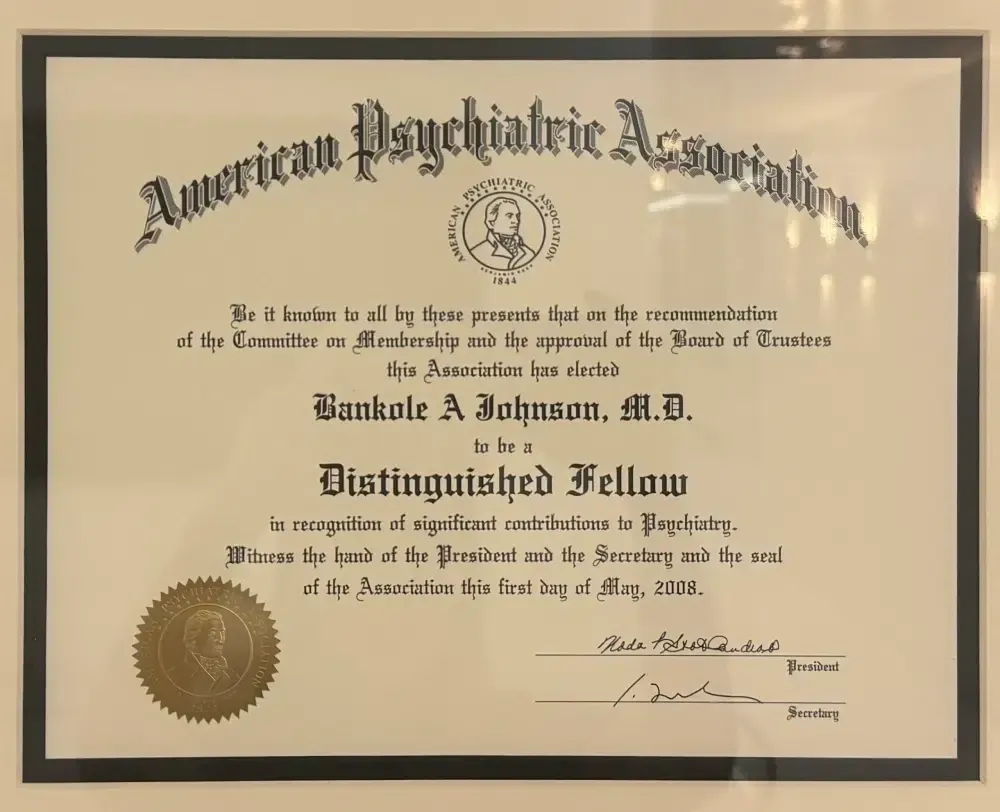
Distinguished Fellow — American Psychiatric Association
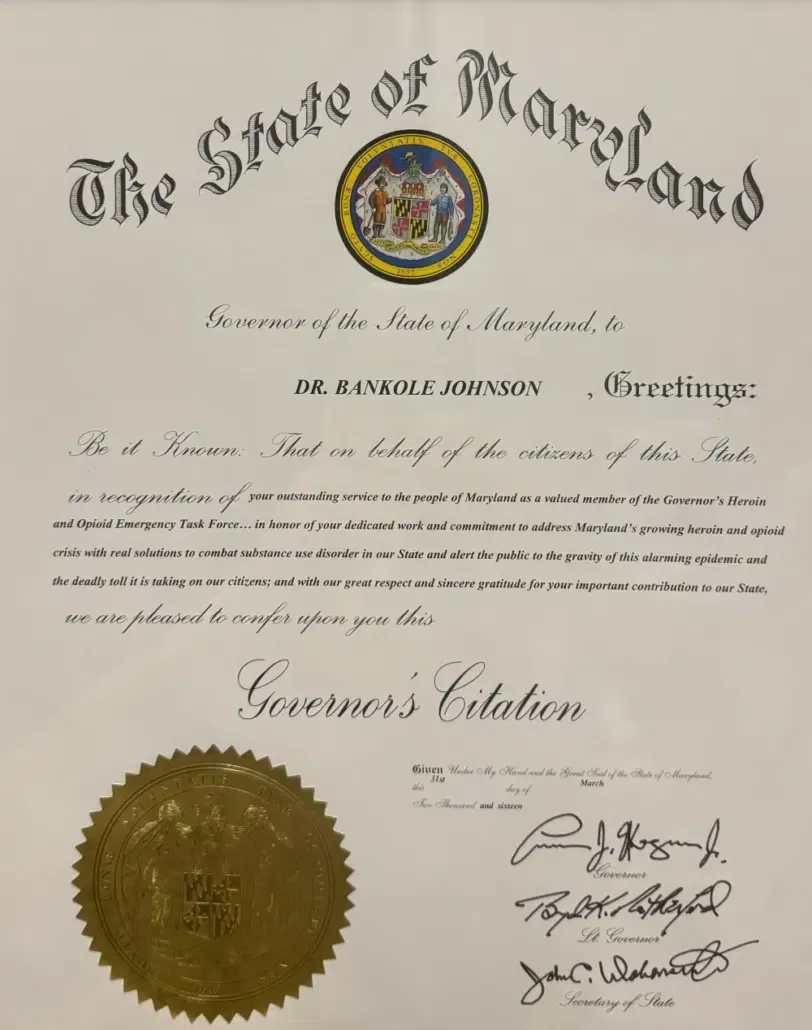
Governor's Citation — Maryland Heroin & Opioid Task Force
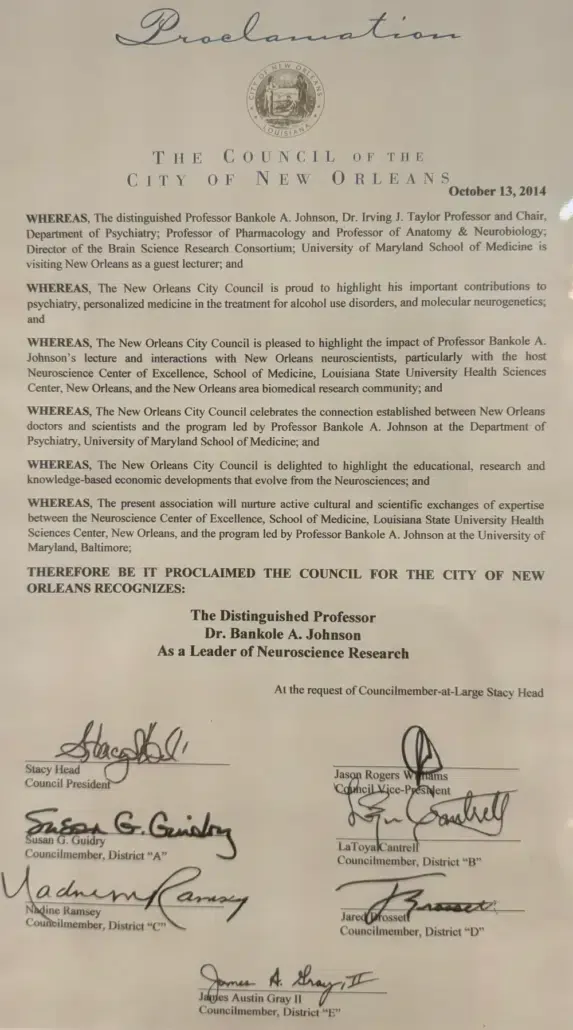
City of New Orleans — Leader of Neuroscience Research
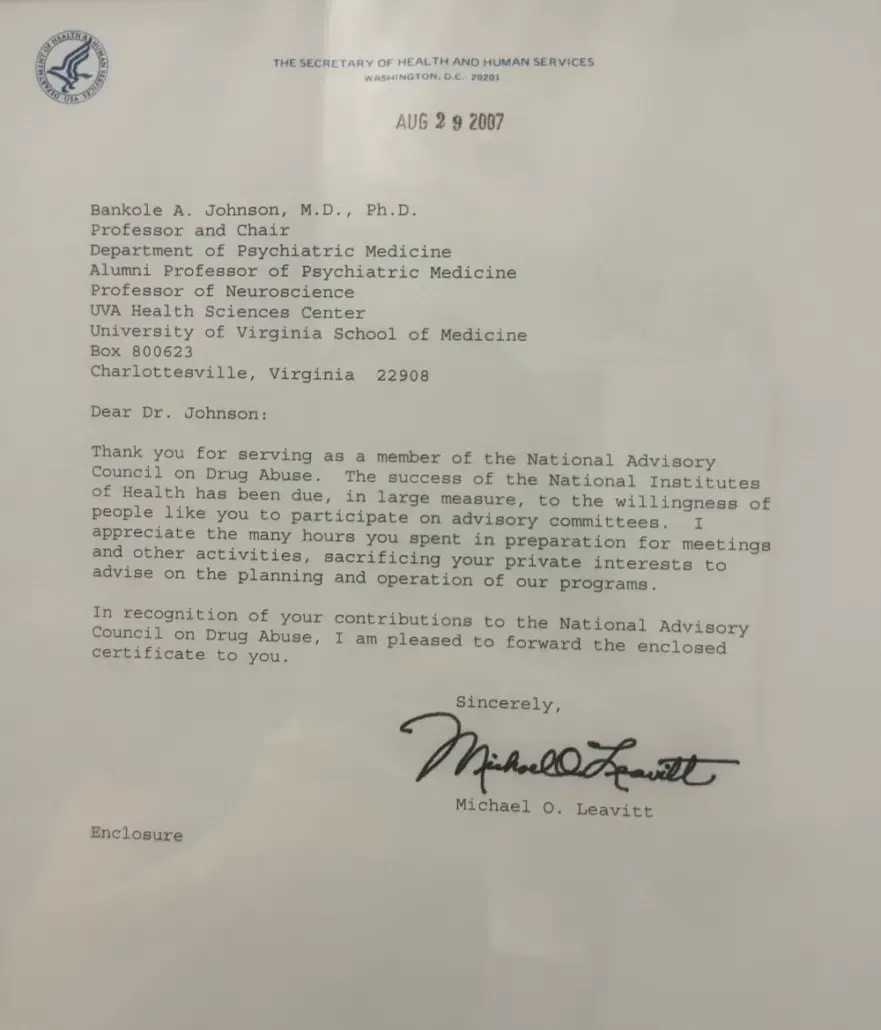
Distin National Advisory Council on Drug Abuse — NIH/NIDA
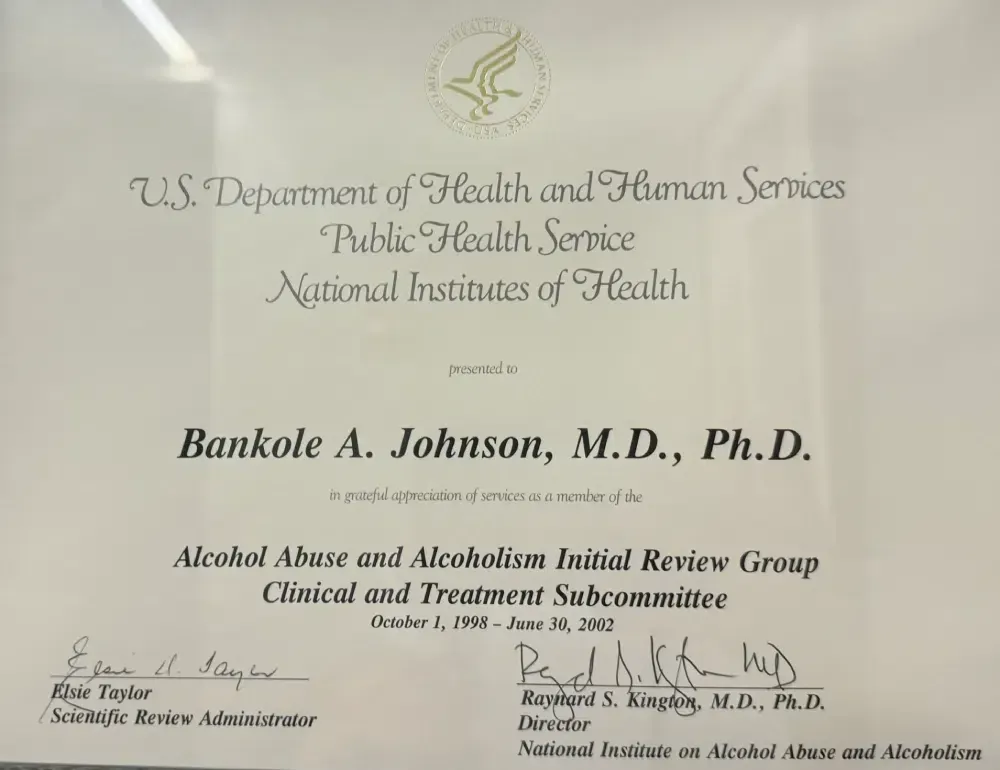
NIAAA Clinical & Treatment Review Subcommittee — HHS/NIH
Private Practice
Confidential Consultation
Restoration is a claim about function, evidence, manufacturing and time not a synonym for novelty. Public materials for Casa Privée, Miami Stem Cell Clinic and IRMN document an institutional direction; they do not by themselves establish efficacy or regulatory approval for every listed intervention.
Recognition, On Paper
Certificates & Citations
A selection of the formal honors documenting the record — from the University of Glasgow's Doctor of Science to a Governor's citation for service on Maryland's Heroin and Opioid Emergency Task Force.
Doctor of Science — University of Glasgow, 2004
Distinguished Fellow — American Psychiatric Association
Governor's Citation — Maryland Heroin & Opioid Task Force
City of New Orleans — Leader of Neuroscience Research
Distin National Advisory Council on Drug Abuse — NIH/NIDA
NIAAA Clinical & Treatment Review Subcommittee — HHS/NIH
Private Practice
Confidential Consultation
Beyond the clinics, Dr. Johnson now dedicates a select portion of his practice to private clients full biological and neuroimaging work-ups, precision-designed protocols, and uncompromising confidentiality, delivered anywhere in or around Miami.
Recognition, On Paper
Certificates & Citations
A selection of the formal honors documenting the record — from the University of Glasgow's Doctor of Science to a Governor's citation for service on Maryland's Heroin and Opioid Emergency Task Force.
Doctor of Science — University of Glasgow, 2004
Distinguished Fellow — American Psychiatric Association
Governor's Citation — Maryland Heroin & Opioid Task Force
City of New Orleans — Leader of Neuroscience Research
Distin National Advisory Council on Drug Abuse — NIH/NIDA
NIAAA Clinical & Treatment Review Subcommittee — HHS/NIH
Private Practice
Confidential Consultation
Beyond the clinics, Dr. Johnson now dedicates a select portion of his practice to private clients — full biological and neuroimaging work-ups, precision-designed protocols, and uncompromising confidentiality, delivered anywhere in or around Miami.
A digital archive dedicated to the life, career, scientific contributions, and legacy of Prof. Dr. Bankole A. Johnson in regenerative medicine and neuroscience.
EXPLORE
RESOURCES


© 2026 Professor Bankole A. Johnson. All rights reserved.
© 2026 Professor Bankole A. Johnson. All rights reserved.