
Prof. Dr. Bankole A. Johnson

Professor Bankole A. Johnson
Institution Building
Nature Has No Departments
The career's multiple appointments and leadership structures are best read as a map of the problem: molecule, circuit, behavior, treatment, organization and public responsibility had to remain connected. Leadership is not external to discovery, it is the architecture that makes repeated discovery possible.
The Academic & Institutional Arc
From Laboratory to Knowledge Institution
Texas · 1993–2004
Build the Research Engine
Human laboratories, outpatient treatment, imaging, pharmacokinetics, biomarkers, randomized trials, staff routines and mentoring, organized as one translational operating system.
Virginia · 2004–2013
Transform the Department
Psychiatry and Neurobehavioral Sciences developed as a balanced portfolio of research, clinical care, education, recruitment, financial stewardship and community responsibility.
Maryland · 2013–2019
Lead by Matrix, Not Hierarchy Alone
Cross-appointments and the Brain Science Research Consortium connected anatomy, neurobiology, pharmacology, neurology, medicine and psychiatry around shared questions.
Miami · 2020–
Translate Through Clinical Enterprise
Casa Privée / Privée Clinics became a setting for precision, neuropsychiatric, regenerative and longevity programs while institutional direction is explicitly distinguished from clinical proof.
IRMN · 2026–
Build the Institution Before the Enterprise
Project Cathedral frames IRMN as a nonprofit knowledge and physician-education institution dedicated to trusted clinical intelligence, evidence appraisal, responsible AI and continuity beyond one founder.
Larkin · 2026–
Return Integration to Biomedical Sciences
The current professorship places the cross-disciplinary method within an explicitly biomedical-sciences academic setting.




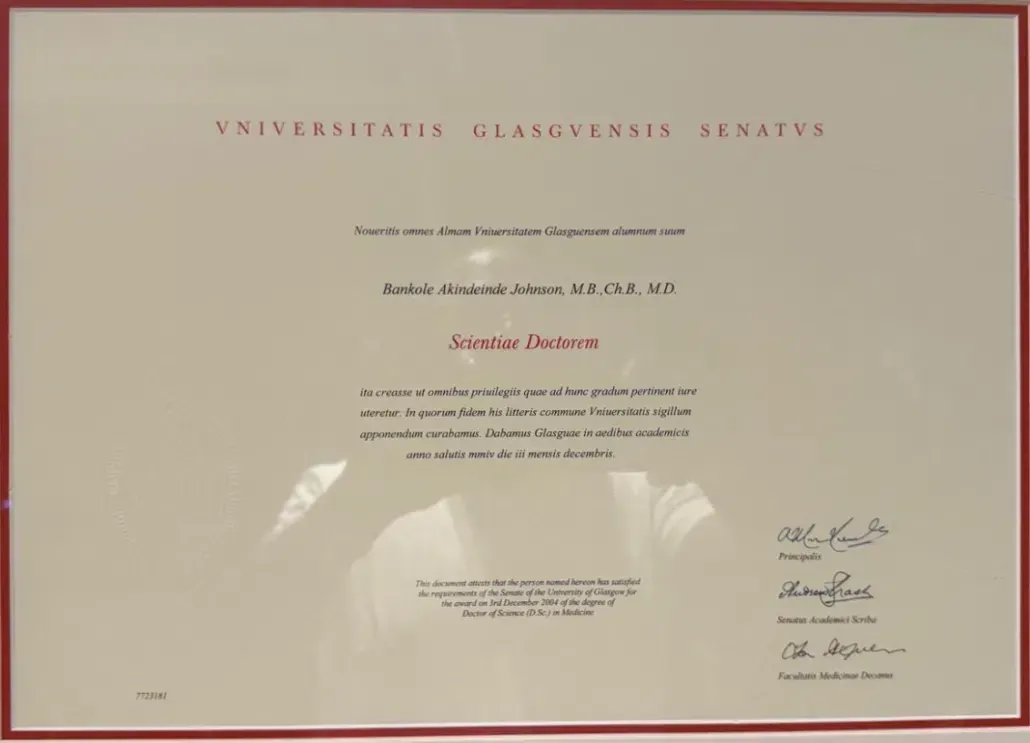
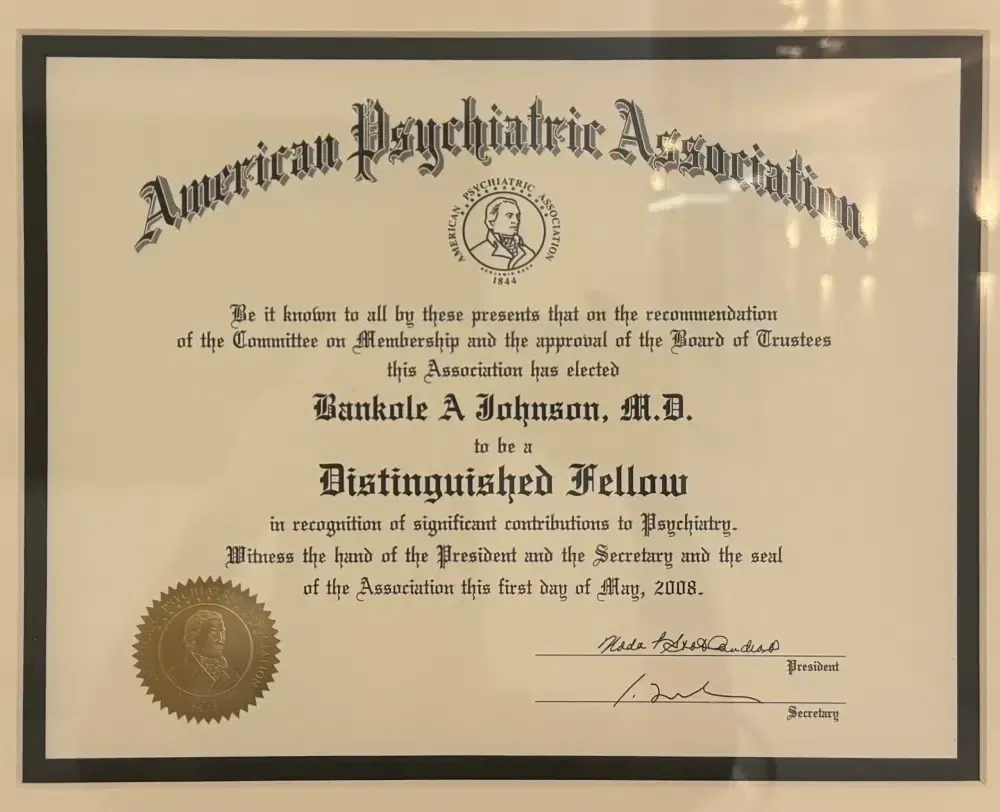
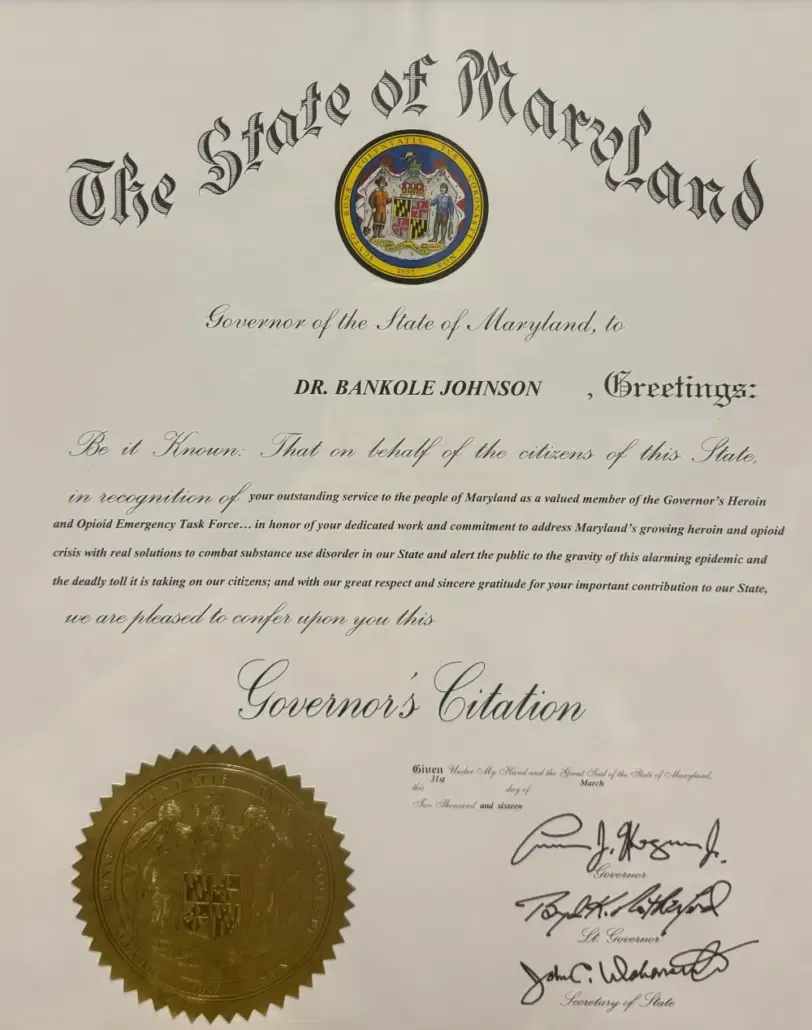
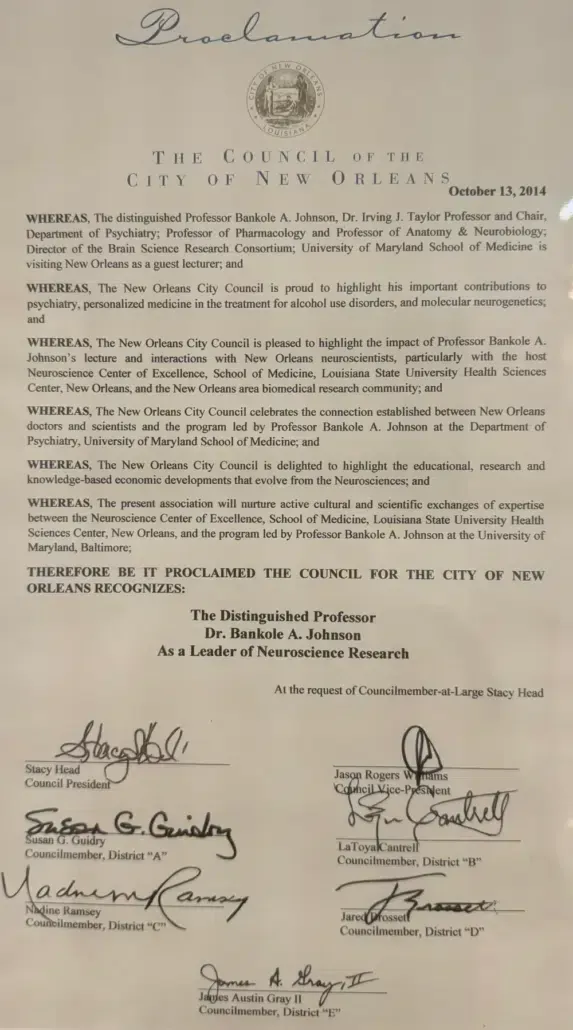
Institution Building
Nature Has No Departments
The career's multiple appointments and leadership structures are best read as a map of the problem: molecule, circuit, behavior, treatment, organization and public responsibility had to remain connected. Leadership is not external to discovery, it is the architecture that makes repeated discovery possible.
The Academic & Institutional Arc
From Laboratory to Knowledge Institution
Texas · 1993–2004
Build the Research Engine
Human laboratories, outpatient treatment, imaging, pharmacokinetics, biomarkers, randomized trials, staff routines and mentoring, organized as one translational operating system.
Virginia · 2004–2013
Transform the Department
Psychiatry and Neurobehavioral Sciences developed as a balanced portfolio of research, clinical care, education, recruitment, financial stewardship and community responsibility.
Maryland · 2013–2019
Lead by Matrix, Not Hierarchy Alone
Cross-appointments and the Brain Science Research Consortium connected anatomy, neurobiology, pharmacology, neurology, medicine and psychiatry around shared questions.
Miami · 2020–
Translate Through Clinical Enterprise
Casa Privée / Privée Clinics became a setting for precision, neuropsychiatric, regenerative and longevity programs while institutional direction is explicitly distinguished from clinical proof.
IRMN · 2026–
Build the Institution Before the Enterprise
Project Cathedral frames IRMN as a nonprofit knowledge and physician-education institution dedicated to trusted clinical intelligence, evidence appraisal, responsible AI and continuity beyond one founder.
Larkin · 2026–
Return Integration to Biomedical Sciences
The current professorship places the cross-disciplinary method within an explicitly biomedical-sciences academic setting.
The Record
Chronological Appointments
Thirteen titles in thirty-eight years, hover any line.
1988 – 1991
Honorary Senior Registrar, General & Forensic Psychiatry
Institute of Psychiatry / University of London
1991 – 1993
Wellcome Research Fellow; Honorary Senior Registrar, Addiction Psychiatry
University of Oxford
1993 – 1997
Assistant Professor and Teaching Fellow
UT Health Science Center at Houston
1997 – 1998
Associate Professor
UT Health Science Center at Houston
1998 – 2000
Professor of Psychiatry & Pharmacology; Deputy Chair; Division Chief
UT Health Science Center at San Antonio
2000 – 2004
Wurzbach Distinguished Professor; Deputy Chair; Division Chief
UT Health Science Center at San Antonio
2004 – 2013
Alumni Professor; Chair, Psychiatry & Neurobehavioral Sciences; Professor of Neuroscience
University of Virginia
2006 – 2013
Professor of Medicine
University of Virginia
2013 – 2019
Dr. Irving J. Taylor Professor & Chair of Psychiatry; Professor of Anatomy & Neurobiology, Pharmacology and Neurology
University of Maryland School of Medicine
2014 – 2019
Director, Brain Science Research Consortium Unit
University of Maryland School of Medicine
2020 –
Founder, Executive Chair & CEO
Privée Clinics / Casa Privée, Miami
2026 –
Professor of Biomedical Sciences
Larkin University, Miami
Jan 2026 –
Founder & Chancellor; President, Scientific & General Advisory Board
Institute of Regenerative Medicine & Neuroscience
Appointments as a Scientific Map
The Problem Chose the Disciplines
Breadth was built from a sequence of depths, each discipline contributed a different level of explanation.
Psychiatry
Phenotype, behavior, diagnosis, suffering, function, therapeutic responsibility.
Pharmacology
Mechanism, dose, exposure, target engagement, efficacy, safety, development.
Anatomy & Neurobiology
Structure, circuits, cellular organization, the physical substrate of function.
Neurology
Disease localization, movement, cognition, degeneration, injury, clinical brain medicine.
Neuroscience
Cross-level integration from molecule and cell to circuit, behavior and systems.
Medicine & Biomedical Science
Comorbidity, whole-person physiology, prevention, shared foundations.
Mentorship as Infrastructure
A Mentor Develops a Person. A Mentoring System Changes What an Institution Can Reproduce.
Regular reviews, divisional meetings, research seminars, experimental design, journal analysis, psychopharmacology, grantsmanship, sponsorship and planning for independence turned mentorship from fortunate chemistry into an institutional routine.
Frequency
Phenotype, behavior, diagnosis, suffering, function, therapeutic responsibility.
Honest Assessment
Clear feedback on science, writing, progress and the probability of success.
Independence
Training is complete only when the mentee can formulate and carry a program of their own.
Project Cathedral
The Institution Before the Enterprise
Knowledge defines the institution; trust protects it; scientific integrity legitimizes it; technology serves it; education extends it; legacy preserves it.
IRMN's mission is to transform information into trusted clinical intelligence. In fields expanding faster than any clinician can assimilate, access to information is no longer the principal limitation — the limiting resource is disciplined interpretation: distinguishing evidence from hypothesis, plausible mechanism from demonstrated benefit, and innovation from promotion. The operating cycle runs from observation and discovery through evidence acquisition, critical appraisal, faculty review, knowledge-graph and AI support, physician education, clinical implementation, outcome feedback and continuous revision.
Responsible AI: artificial intelligence is treated as an instrument that extends human judgment, never as a substitute for human responsibility. An evolving model requires an evolving evidence plan, validation, provenance and accountable clinical oversight.
A digital archive dedicated to the life, career, scientific contributions, and legacy of Prof. Dr. Bankole A. Johnson in regenerative medicine and neuroscience.
EXPLORE
RESOURCES


© 2026 Professor Bankole A. Johnson. All rights reserved.